01
Mobile line boring
Alignment and precision machining of worn pin, hinge, pivot and bearing bores directly on the machine, vessel or structure.
Restore worn bores directly on the machine, vessel or structure: line boring, weld build-up and finish machining as one complete on-site repair. Less dismantling and transport, less downtime, and verified final dimensions.
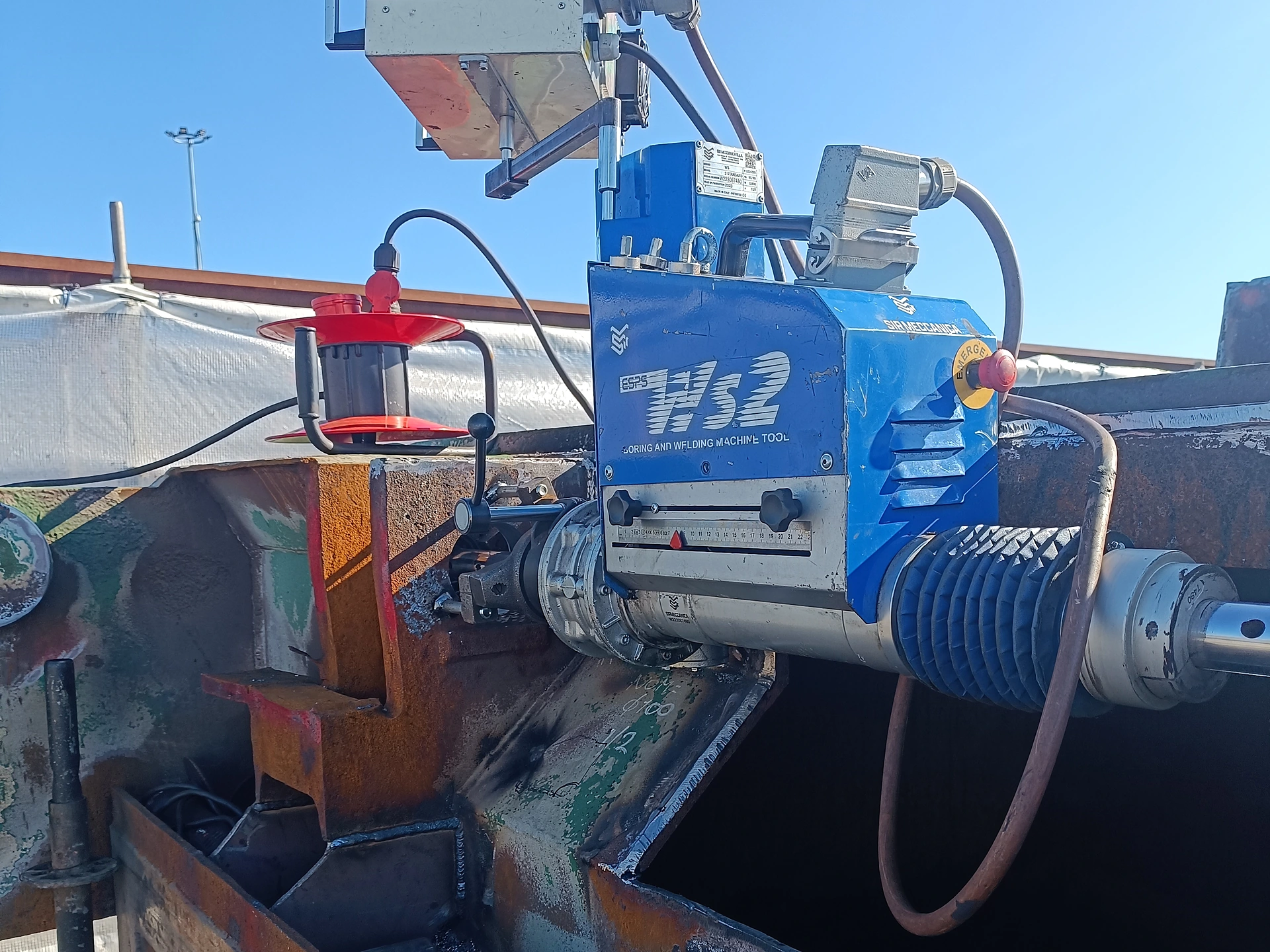
Wear creates play, poor fit and accelerating damage in pins, bushings and bearing positions. BoreHub restores the bore on site so the joint can return to the intended geometry and working fit.
Alignment and precision machining of worn pin, hinge, pivot and bearing bores directly on the machine, vessel or structure.
When wear is too severe for machining alone, material is rebuilt by welding and prepared for final machining.
The restored bore is machined to the agreed final dimension and checked before handover.
On-site restoration is most valuable on large, heavy or installed components that are impractical to dismantle and transport only for machining.
Hatch-cover hinge and pin bores, ramps, deck machinery, pivot connections and other worn bore or bushing seats.
Excavators, loaders, booms, buckets, frames, pin bores and articulated joints.
Cranes, reach stackers, lifting and cargo-handling equipment where downtime directly affects operations.
Machines and structures where dismantling or transport would be slow, difficult or expensive.
On-site machining is more than convenience. Where conditions allow, it can remove stages of dismantling, lifting, transport and reinstallation from the repair chain.
Where possible, machining is completed at the assembly, reducing the need to remove and handle large components.
Large components do not always need to travel to a machine shop and back — the tooling comes to the component.
The job does not end with welding. The bore is finish-machined to the agreed dimension and checked before handover.
The same method suits planned maintenance and wear discovered during operation, inspection or dry-docking.
This is the same component. On the left is the condition before restoration; on the right is the same part after restoration, with a clean machined surface and restored geometry.
Portable machining equipment is mounted directly at the repair location.
Machining and restoration are carried out at the equipment, reducing unnecessary dismantling.
Measurements help define the scope and verify the restored geometry.
The same bore before restoration and after finish machining.
3–5 clear photos, location, approximate bore diameter, number of repair positions and required timing.
We review access, wear, alignment requirements, repair method and the equipment needed for the job.
Once the information is sufficient, we agree the scope, price, timing and mobilisation.
Alignment and machining, weld build-up where required, finish machining and final dimensional checks before handover.
Not sure? Send photos. We will give you a practical first view on whether the repair makes sense on site or whether another method is more appropriate.
Often, no. Portable equipment is set up at the repair location and the machining is completed in place when access and working conditions allow.
No. The method depends on the amount of wear, material, final dimension and required fit. Some bores only need machining; others need material rebuilt first.
Practical hands-on experience covers approximately Ø40–500 mm. Each job is assessed individually because access, geometry and working conditions matter just as much as diameter.
BoreHub is based in Estonia. For suitable scopes, mobilisation is possible across the Baltics and to other European projects.
You do not need a perfect technical specification. Add the key details and, if possible, photos — the enquiry is sent directly to info@borehub.ee.